中文名称:电气工程中的人工智能:基础理论与案例研究
英文名称:Artificial Intelligence in Electrical Engineering: Fundamentals and Case Studies
1. 课程简介
人工智能正深刻推动电气工程领域的发展,为智能电网、可再生能源系统、电力电子、电动汽车、智能监测等众多新兴技术提供智能自主的解决方案。
《电气工程中的人工智能:基础理论与案例研究》课程将系统介绍人工智能基础理论及其在电气工程各领域中的应用。课程邀请国际知名学者和人工智能赋能电气工程领域的顶尖专家授课,通过前沿技术讲解、工程实践分享和真实案例分析,帮助学生深入了解人工智能在解决复杂工程问题、推动智能化、高效化和绿色可持续电力能源系统发展中的重要作用。课程旨在帮助学生掌握人工智能赋能电气工程的核心知识,拓展学科视野,为未来相关领域的科研、创新和职业发展奠定基础。
2.课程报名
(一)招生对象
本课程面向全球本科生、研究生及社会公众开放(西安交通大学本校学生可免费参与),主要面向电气工程、电子工程、自动化、能源与电力工程、计算机工程等相关专业学生。课程无需人工智能基础,适合希望系统了解人工智能在电气工程领域中的应用的学习者。
(二)报名方式
本次课程采用线上报名方式,不设人数限制。有意参加的学员请扫描下方二维码,或点击下方链接报名。

报名链接:https://v.wjx.cn/vm/hFwczOu.aspx#
在课程列表中选择《电气工程中的人工智能:基础理论与案例研究》Artificial Intelligence in Electrical Engineering: Fundamentals and Case Studies
报名截止时间:2026年7月24日
所有成功报名的学员,通过审核后,将邀请您加入课程微信群。课程通知、课程安排、会议链接及相关信息将在群内统一发布。
(三)授课形式与学习认证
本次课程采用线上与线下同步结合的方式开展。线上平台为腾讯会议,会议链接将统一发布于课程微信群,请学员留意群内通知。
课程不收取任何报名费用,学员在按时完成全部课程要求并达到规定标准后,将获得西安交通大学官方学习证书,作为国际学习经历及学术能力提升的重要证明。
3.课程安排
日期 |
讲座时间 (北京时间) |
课程题目 |
主讲人 |
所在单位 |
7月25日 |
14:30–18:30 |
电气工程中的人工智能:基础理论(人工智能、机器学习与深度学习)及实际应用 |
Mohamad Abou Houran |
西安交通大学,中国 |
7月26日 |
16:00–18:00 |
面向可扩展能源管理基础设施的人工智能:智能电网、家庭能源聚合与可持续能源系统 |
Mohan Lal Kolhe |
挪威阿格德大学,挪威 |
7月27日 |
16:30–18:30 |
基于人工智能的风氢综合电力系统快速频率响应控制 |
Mostafa Kheshti |
华威大学,英国 |
7月28日 |
16:00–18:00 |
从传统方法到智能优化:面向光伏系统高性能MPPT控制的随机优化技术 |
Majad Mansoor |
那慕尔大学,比利时 |
7月29日 |
14:00–16:00 |
基于人工智能的高压变压器健康状态评估 |
Abubakar Siddique |
哈瓦贾·法里德工程与信息技术大学,巴基斯坦 |
7月29日 |
16:00–18:00 |
面向电动汽车的人工智能:智能电池管理与电力电子技术 |
Khairy Sayed |
索哈杰大学,埃及; 纽约市立大学(CUNY),美国 |
7月30日 |
14:30–16:00 |
面向混合直流微电网控制的不确定性感知强化学习 |
Alireza Bakhshai |
女王大学,加拿大 |
7月30日 |
16:00–18:00 |
面向硬件验证的人工智能:工业应用与案例分析 |
Ahmed Hassan |
TestFlow,美国 |
课程如有任何更新,将以电气工程学院发布的通知为准,并通过课程群予以告知。
4. 教师简介
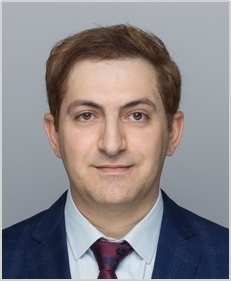
Mohamad Abou Houran(课程负责人)
西安交通大学电气工程学院副教授,博士生导师
课程题目:电气工程中的人工智能:基础理论(人工智能、机器学习与深度学习)及实际应用
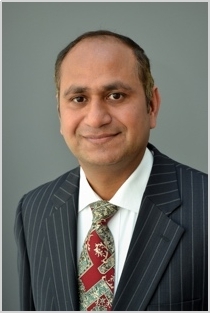
Mohan Lal Kolhe
挪威阿格德大学教授
课程题目:面向可扩展能源管理基础设施的人工智能:智能电网、家庭能源聚合与可持续能源系统
(欧盟 FP7 SEMIAH项目案例研究:面向家庭能源聚合的可扩展能源管理基础设施)
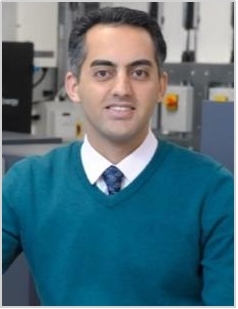
Mostafa Kheshti
英国华威大学助理教授
课程题目:基于人工智能的风氢综合电力系统快速频率响应控制
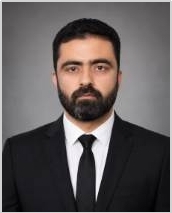
Majad Mansoor
比利时那慕尔大学研究员
课程题目:从传统方法到智能优化:面向光伏系统高性能MPPT控制的随机优化技术
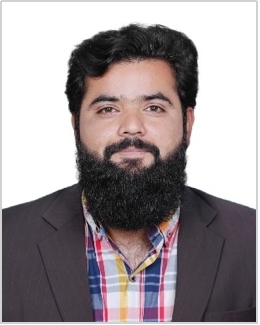
Abubakar Siddique
巴基斯坦哈瓦贾·法里德工程与信息技术大学副教授
课程题目:基于人工智能的高压变压器健康状态评估
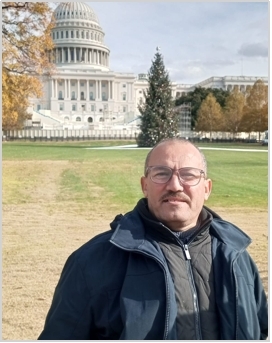
Khairy Sayed
埃及索哈杰大学副教授
美国纽约市立大学富布赖特访问学者
课程题目:面向电动汽车的人工智能:智能电池管理与电力电子技术
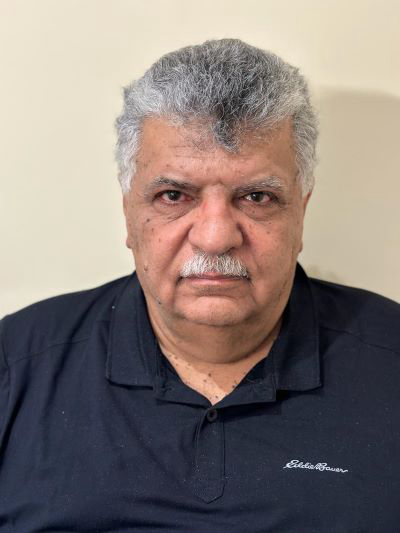
Alireza Bakhshai
加拿大女王大学教授
课程题目:面向混合直流微电网控制的不确定性感知强化学习
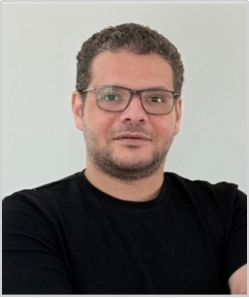
Ahmed Hassan
美国TestFlow联合创始人兼首席技术官
课程题目:面向硬件验证的人工智能:工业应用与案例分析
Notice of 2026 Xi'an Jiaotong University Global Summer School — XJTISS Course: Artificial Intelligence in Electrical Engineering: Fundamentals and Case Studies
Chinese Title:电气工程中的人工智能:基础理论与案例研究
English Title:Artificial Intelligence in Electrical Engineering: Fundamentals and Case Studies
1- Course Introduction
Artificial Intelligence (AI) is transforming electrical engineering by enabling intelligent and autonomous solutions across smart grids, renewable energy systems, power electronics, electric vehicles, intelligent monitoring, and many other emerging technologies. This course," Artificial Intelligence in Electrical Engineering: Fundamentals and Case Studies," provides a comprehensive introduction to AI fundamentals and their applications across diverse electrical engineering fields. Through lectures delivered by distinguished international scholars and leading experts in AI-enabled electrical engineering, students will explore state-of-the-art technologies, practical engineering solutions, and real-world case studies that demonstrate how AI is addressing complex engineering challenges and driving the development of smarter, more efficient, and sustainable electrical energy systems. The course equips students with the knowledge and perspectives needed for future research, innovation, and careers in AI-enabled electrical engineering.
2- Course Application
(a) Target Students
This course is open to undergraduate students, graduate students, and members of the public worldwide, who may participate either online or offline. It is primarily intended for students majoring in Electrical Engineering and related disciplines, including Electronic Engineering, Automation, Energy and Power Engineering, and Computer Engineering. No prior experience in artificial intelligence is required, making the course suitable for students seeking a comprehensive introduction to AI applications in electrical engineering.
(b) Application Method
Online application. There is no limit on the number of participants. Students who intend to register for this course should scan the QR code or click the registration link below:
Registration link: https://v.wjx.cn/vm/hFwczOu.aspx#
Please select the course “Artificial Intelligence in Electrical Engineering: Fundamentals and Case Studies” from the drop-down menu.
Application Deadline: July 24, 2026
After verification, all registered participants will be added to the WeChat course group, where important announcements, lecture links, schedules, and course updates will be shared.
(c) Delivery Mode & Certification
The course will be delivered in a hybrid format, combining both online and offline sessions. The online sessions will be held via Tencent Meeting, and lecture links will be released in the WeChat course group. Please stay tuned for updates.
There is no registration fee for this course. Participants who timely complete all course requirements to the required standard will receive an official Xi'an Jiaotong University Learning Certificate, which may serve as evidence of international learning experience and academic development.
3- Course Schedule
Date |
Lecture Time (Beijing Time) |
Lecture Title |
Lecturer |
Affiliation |
July 25 |
14:30–18:30 |
Artificial Intelligence in Electrical Engineering: Fundamentals (AI, Machine Learning, and Deep Learning) & Applications |
Mohamad Abou Houran |
Xi'an Jiaotong University, China |
July 26 |
16:00–18:00 |
Artificial Intelligence for Scalable Energy Management Infrastructures: Smart Grids, Household Aggregation and Sustainable Energy Systems |
Mohan Lal Kolhe |
University of Agder, Norway |
July 27 |
16:30–18:30 |
AI-based Fast Frequency Response Control for Wind–Hydrogen Integrated Power Systems |
Mostafa Kheshti |
University of Warwick, United Kingdom |
July 28 |
16:00–18:00 |
From Conventional to Intelligent: Stochastic Optimization for High-Performance MPPT Control in Solar Power |
Majad Mansoor |
University of Namur, Belgium |
July 29 |
14:00–16:00 |
High-Voltage Transformers' Health Index Evaluation Using AI |
Abubakar Siddique |
Khwaja Fareed University of Engineering & Information Technology, Pakistan |
July 29 |
16:00–18:00 |
Artificial Intelligence for Electric Vehicles: Intelligent Battery Management and Power Electronics Technologies |
Khairy Sayed |
Sohag University, Egypt City University of New York (CUNY), USA |
July 30 |
14:30–16:00 |
Uncertainty-aware Reinforcement learning for hybrid Dc Microgrid Control |
Alireza Bakhshai |
Queen’s University, Canada |
July 30 |
16:00–18:00 |
Artificial Intelligence for Hardware Validation: Industrial Applications and Case Studies |
Ahmed Hassan |
TestFlow, USA |
Any updates regarding the course will be announced by the School of Electrical Engineering and communicated through the Wechat course group.
Speaker List
Course Instructor
Dr. Mohamad Abou Houran
Associate Professor, School of Electrical Engineering
Xi'an Jiaotong University, China
Lecture: Artificial Intelligence in Electrical Engineering: Fundamentals (AI, Machine Learning, and Deep Learning) & Applications
Dr. Houran is an Associate Professor and a PhD supervisor with the School of Electrical Engineering at Xi'an Jiaotong University (XJTU), China. His research interests include power electronics, wireless power transfer (WPT), and the integration of artificial intelligence (AI) with modern electrical energy systems. Dr. Houran has published more than 70 peer-reviewed papers in leading international journals and conferences, including IEEE Transactions and other top-tier SCI journals. He has authored four ESI Highly Cited Papers, secured several patents, and edited a book. He has been recognized among the world's Top 2% Scientists in the Stanford University–Elsevier global rankings, 2025. He has led multiple national and industry-funded research projects, including projects supported by the National Natural Science Foundation of China (NSFC) and the Ministry of Science and Technology.
He actively contributes to the international research community as an Associate Editor of the IEEE Consumer Electronics Magazine, a Guest Editor for international journals, and a reviewer for numerous leading IEEE journals, including IEEE Transactions on Power Electronics (TPEL), IEEE Transactions on Industrial Electronics (TIE), and the IEEE Journal of Emerging and Selected Topics in Power Electronics (JESTPE). He is also an IEEE Senior Member and has served as a reviewer for many international IEEE conferences. His current research focuses on AI-enabled power electronics, intelligent wireless power transfer, and next-generation electrical energy systems, bridging cutting-edge research with practical engineering solutions to advance intelligent and sustainable electrification.
Invited Speakers
Prof. Mohan Lal Kolhe
Professor, University of Agder, Norway
Lecture: Artificial Intelligence for Scalable Energy Management Infrastructures: Smart Grids, Household Aggregation and Sustainable Energy Systems
(Case Study of the EU FP7 SEMIAH Project: Scalable Energy Management Infrastructure for Household Aggregation)
Prof. Dr. Mohan Lal Kolhe is a Full Professor of Smart Grid and Sustainable Electrical Energy Systems at the University of Agder (UiA), Norway. He is an internationally recognized researcher with more than 30 years of academic, research, and industrial experience across Europe, Australia, Asia, and North America. His expertise encompasses smart grids, renewable energy systems, hydrogen energy, energy storage, artificial intelligence for energy systems, power system planning, digital energy technologies, and sustainable electrification.
Professor Kolhe has successfully led and contributed to numerous internationally funded research and innovation projects, including the European Union Framework Programmes, where he has advanced scalable smart energy management infrastructures, distributed energy resources, household aggregation, demand response, and intelligent energy management. His research has made significant contributions to the integration of renewable energy and hydrogen technologies for resilient, low-carbon energy systems.
He has published more than 250 peer-reviewed research articles, conference papers, books, and book chapters, and his work has received widespread international recognition with a strong citation record. He has consistently been recognized among the world's Top 2% Scientists in the Stanford University–Elsevier global rankings. Professor Kolhe serves as an Editor, Guest Editor, and Editorial Board Member for several leading international journals and has chaired numerous international conferences, technical symposia, and special sessions.
A passionate educator and mentor, Professor Kolhe has supervised numerous doctoral and master's students and delivered keynote and invited lectures worldwide. His current research focuses on AI-enabled smart grids, intelligent energy management, hydrogen energy systems, digital twins, energy market analytics, and sustainable electrical engineering to accelerate the global transition toward secure, resilient, and carbon-neutral energy systems.
Dr. Mostafa Kheshti
Assistant Professor, University of Warwick, United Kingdom
Lecture: AI-based Fast Frequency Response Control for Wind-Hydrogen Integrated Power Systems
Dr. Mostafa Kheshti (Senior Member, IEEE) is an Assistant Professor in the School of Engineering at the University of Warwick, United Kingdom. He received his M.Sc. and Ph.D. in Electrical Power Engineering from Xi'an Jiaotong University in 2013 and 2017, respectively. Before joining the University of Warwick, he served as an Associate Professor at Shandong University, China, and previously worked as a Power System Engineer at Fars Regional Electric Company. His research interests include renewable-integrated power systems, low-inertia power system dynamics, power system stability and control, and artificial intelligence applications in power systems.
At the University of Warwick, Dr. Kheshti leads and contributes to collaborative research projects with industrial and academic partners, including the UK National Energy System Operator, National Grid, and several European institutions. He has published over 56 peer-reviewed journal and conference papers.
Dr. Majad Mansoor
Researcher, University of Namur, Belgium
Lecture: From Conventional to Intelligent: Stochastic Optimization for High-Performance MPPT Control in Solar Power
Dr. Majad Mansoor is currently a researcher at the University of Namur, Belgium, where his research focuses on Large Language Models (LLMs), task-specific content analysis, semantic understanding of medical technologies, biomedical sensing systems, and trustworthy artificial intelligence for healthcare applications. His current work emphasizes interdisciplinary research that bridges artificial intelligence, biomedical technologies, and renewable energy systems. Dr. Mansoor received his PhD from the University of Science and Technology of China (USTC), where he conducted high-impact research in renewable energy systems, power electronics, intelligent control, machine learning, and artificial intelligence applications for photovoltaic (PV) energy systems. His research has made significant contributions to renewable energy forecasting, Maximum Power Point Tracking (MPPT), photovoltaic systems operating under partial shading conditions, hybrid deep learning models, and bio-inspired optimization algorithms, including Runge–Kutta Optimization and stochastic optimization techniques for improving the efficiency, reliability, and performance of renewable energy harvesting systems.
He has authored and co-authored more than 55 peer-reviewed journal articles, conference papers, and book chapters, which have collectively received more than 3,600 citations. His work has been published in leading IEEE and Elsevier SCI journals.
Dr. Abubakar Siddique
Associate Professor, Khwaja Fareed University of Engineering & Information Technology, Pakistan
Lecture: High Voltage Transformers' Health Index Evaluation Using AI
Dr. Abubakar Siddique received his Ph.D. degree from North China Electric Power University (NCEPU) Beijing, China in 2019 and his Masters and Bachelor's degrees from Islamia University Bahawalpur (IUB), Punjab, Pakistan in 2011 and 2013, respectively. He is currently working as an Associate Professor in Electrical & Biomedical Engineering Department at Khwaja Fareed University of Engineering & Information Technology (KFUEIT) Punjab, Pakistan. He is a professional member of the IEEE organization NJ, USA, member of IEEE Pakistan, and registered as Professional Engineer with the Pakistan Engineering Council. With extensive academic and managerial expertise, Dr. Abubakar serves as the Director of the High Voltage Laboratory at KFUEIT, overseeing commercial industrial testing. His leadership roles include serving as an ORIC Additional Director, an IEEE Branch Counsellor, and a Departmental Student Affairs Coordinator. His research primarily centers on advanced dielectric materials, high-voltage insulation testing, and artificial intelligence applications in high-voltage engineering.
Dr. Khairy Sayed
Fulbright Research Scholar at the City University of New York (CUNY), USA
Lecture: Artificial Intelligence for Electric Vehicles: Intelligent Battery Management and Power Electronics Technologies
Dr. Sayed is an Associate Professor of Electrical Engineering at the Faculty of Engineering, Sohag University, Egypt, and a Fulbright Research Scholar at the City University of New York (CUNY), USA. His research focuses on power electronics, renewable energy systems, smart grids, microgrids, electric transportation, intelligent energy management, and artificial intelligence applications in modern power systems. Dr. Sayed has extensive experience in the modeling, design, control, optimization, and hardware implementation of power electronic converters, electric motor drives, and distributed energy systems. His expertise encompasses wide-bandgap power converters, battery energy storage systems, hydrogen energy technologies, virtual power plants, building energy management, and more electric aircraft applications. He is also actively engaged in developing AI-driven solutions for predictive control, digital twins, energy optimization, fault diagnosis, and autonomous energy management.
He has authored numerous peer-reviewed journal articles and conference papers in the fields of power electronics, renewable energy, and intelligent energy systems. His current research interests include AI-enhanced power electronics, intelligent control of electric drives, hydrogen-based smart grids, AI-powered virtual power plants, digital twin technologies, energy market optimization, and sustainable electrification for future transportation systems. He has also contributed to the development of interdisciplinary research projects addressing energy sustainability, decarbonization, and next-generation intelligent energy infrastructures through international collaborations.
Prof. Alireza Bakhshai
Professor, Queen's University, Canada
Lecture: Uncertainty-aware Reinforcement learning for hybrid Dc Microgrid Control
Prof. Alireza Bakhshai, IEEE Fellow, received his PhD degree from Concordia University, Canada in 1997. From 1998 to 2004, he served as an assistant professor in the faculty of Electrical and Computer Engineering at Isfahan University of Technology. Since 2004, he has been with Queen's University in Canada, where he is currently a full professor.
Dr. Bakhshai is a fellow of the IEEE and a licensed Professional Engineer (P.Eng.) in Ontario, Canada. He has co-authored more than 400 peer-reviewed papers and scientific publications in the field of power electronics including high power electronics and applications, renewable energy conversion, and control systems.
Ahmed Hassan
Co-Founder & Chief Technology Officer (CTO), TestFlow, USA
Lecture: Artificial Intelligence for Hardware Validation: Industrial Applications and Case Studies
Ahmed Hassan is the Co-Founder and Chief Technology Officer (CTO) of TestFlow, USA, an AI-powered semiconductor validation platform transforming post-silicon validation through intelligent automation. With more than a decade of experience in semiconductor validation, he has worked on the development, bring-up, debugging, and validation of complex integrated circuits at leading technology companies, including Intel, Altera (now Intel PSG), and Enpirion.
Throughout his career, Ahmed has specialized in post-silicon validation, embedded firmware, FPGA validation, power management ICs, system-level testing, and laboratory automation. His work has focused on developing structured validation methodologies, automating test workflows, debugging silicon issues, and ensuring device compliance across multiple generations of semiconductor products.
Drawing on years of hands-on industry experience, Ahmed founded TestFlow to modernize semiconductor validation using artificial intelligence. Under his technical leadership, the company has developed an AI-driven platform that automates datasheet analysis, test plan generation, instrument control, script execution, and validation reporting. He also led the development of ATOMS, an intelligent validation language that enables engineers to create structured and reusable laboratory automation workflows, reducing development time and eliminating knowledge silos.
His current interests include AI for semiconductor validation, intelligent laboratory automation, chip verification, embedded systems, and next-generation engineering productivity tools.